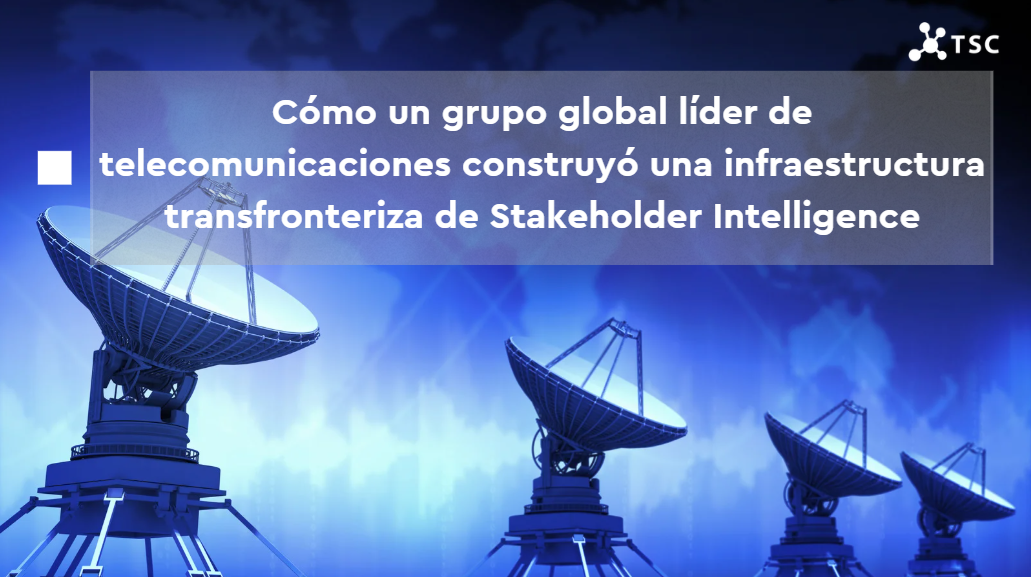
A leading global telecommunications group operates across more than 20 markets on two continents, with a Public Affairs function responsible for coordinating engagement with policymakers, regulators, and key influencers at both the Group level and across individual country-level Operating Companies (OpCos).
The function reports to the Chief External & Corporate Affairs Officer, and its remit spans everything from EU regulatory engagement in Brussels to government relations across sub-Saharan Africa and the Middle East. Operating at this scale, with 21 designated country-level teams and 475 platform users, the function demands a level of structural intelligence and coordination that goes well beyond what most public affairs teams have historically been equipped to deliver.
The core challenge was one of scale and fragmentation. Twenty-one teams across Europe, Africa, and the Middle East were each managing their own stakeholder relationships, policy engagements, and intelligence workflows with no shared view of what was happening across the organisation.
There was no central record of who had been engaged, no mechanism for the Group team to see patterns across markets, and no structured way to connect issue intelligence from one geography to strategic decisions at the Group level.
For a function expected to produce consolidated engagement reports and brief the Chief External Affairs Officer on the state of global stakeholder relationships, this absence of institutional infrastructure created real operational exposure.
TSC.ai deployed its stakeholder intelligence and engagement platform across the Group’s global Public Affairs function in three phased waves. Phase 1 covered five priority markets, including the UK, Brussels, South Africa, Spain, and Hungary. Phases 2 and 3 extended the system to a further sixteen countries across Europe and Africa, including Germany, Italy, Egypt, Turkey, Tanzania, Kenya, Mozambique, and the Democratic Republic of Congo.
The platform was configured with a database of ~30,000 stakeholders, covering both English and Arabic, 20 custom dashboards structured by country and issue theme, and an engagement tracking workflow that enabled teams in each of the 21 markets to log interactions directly in the system.
In parallel, the teams are also receiving a weekly intelligence - a group-level digest and eight geo-specific newsletters - drawing from a media monitoring scope covering 23 countries.
The Group Public Affairs team needed a shared record of stakeholder engagement across all 21 operating markets. Without it, the function had no reliable way to produce consolidated engagement reports, identify relationship gaps by geography, or maintain institutional memory as personnel moved between markets and roles. Engagement activity that existed only in individual inboxes and notebooks could not be surfaced, synthesised, or reported - a structural weakness for a function with direct accountability to the Chief External Affairs Officer.
TSC.ai became the central engagement tracking system for the Group’s Public Affairs function. The mandate in all 21 markets was to log all interactions through the platform. Over the course of the engagement, teams logged 1,148 touchpoints across the system - building a searchable institutional record of meetings, interactions, and policy engagements spanning two continents.
The platform enabled the Group team to produce consolidated engagement reports by market, giving the Head of Public Affairs a structured view of where engagement was active and where gaps existed. For the first time, the function had a single source of truth for relationship activity across its full global footprint - not dependent on individuals, not locked in local files, and accessible to the Group team in real time.
For a telecommunications group with significant exposure to European regulatory developments - including Open RAN policy, high-risk vendor regulation, and spectrum allocation - Brussels was a critical engagement environment. The Public Affairs team needed a systematic way to identify which events mattered, who was shaping debate within them, and how key policy influencers connected to each other. Without that capability, engagement in Brussels remained largely reactive and relationship-dependent rather than intelligence-led.
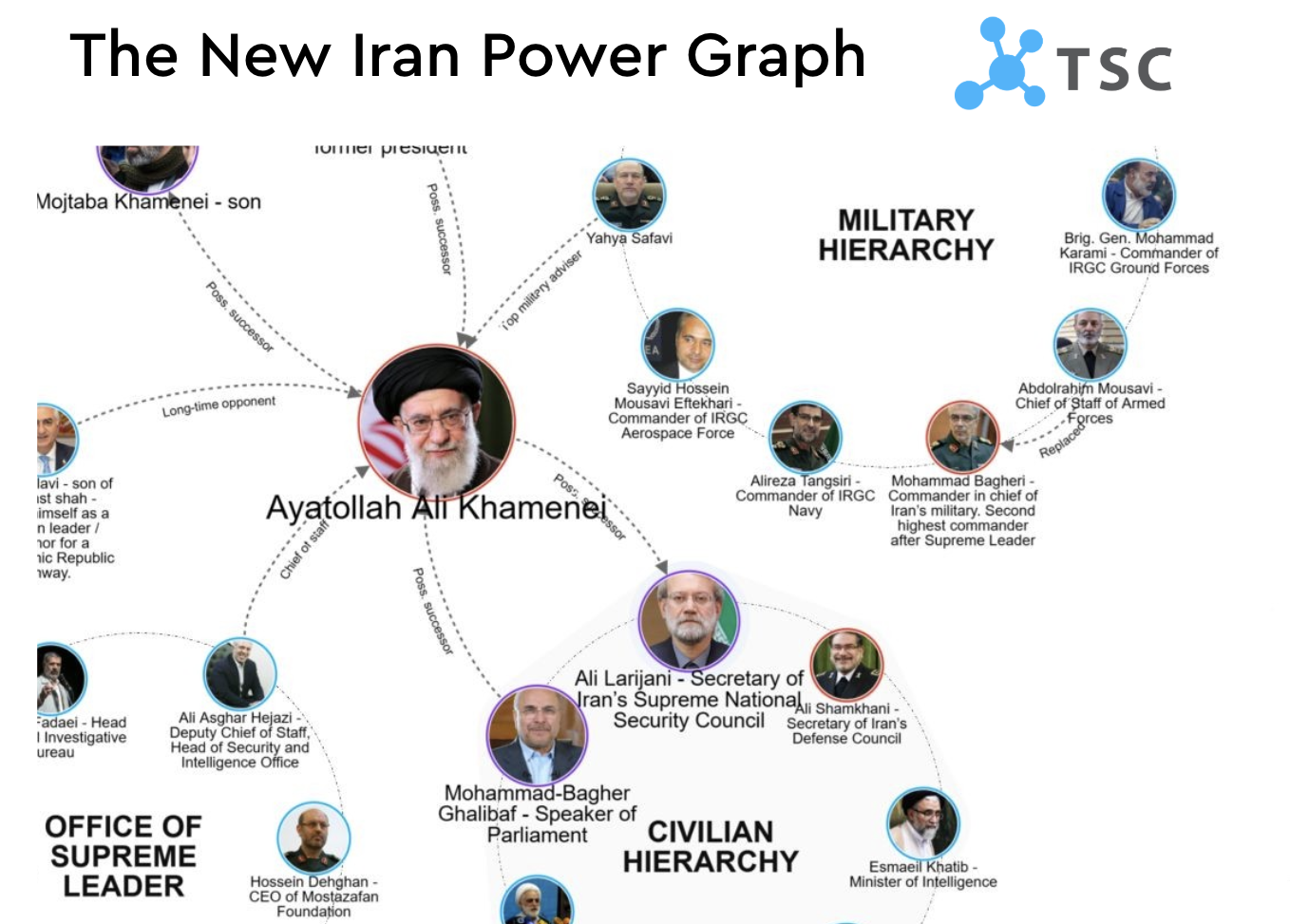
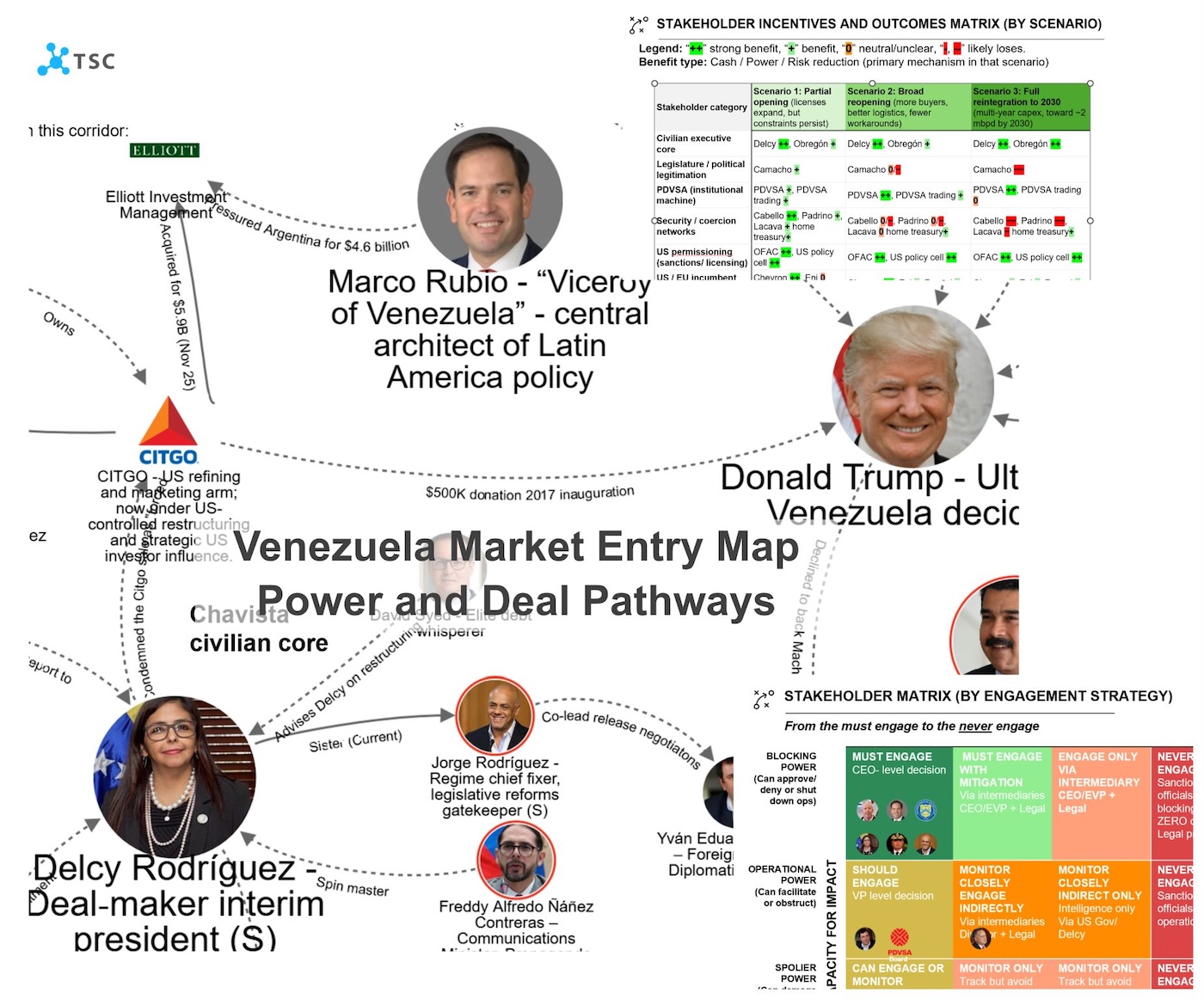
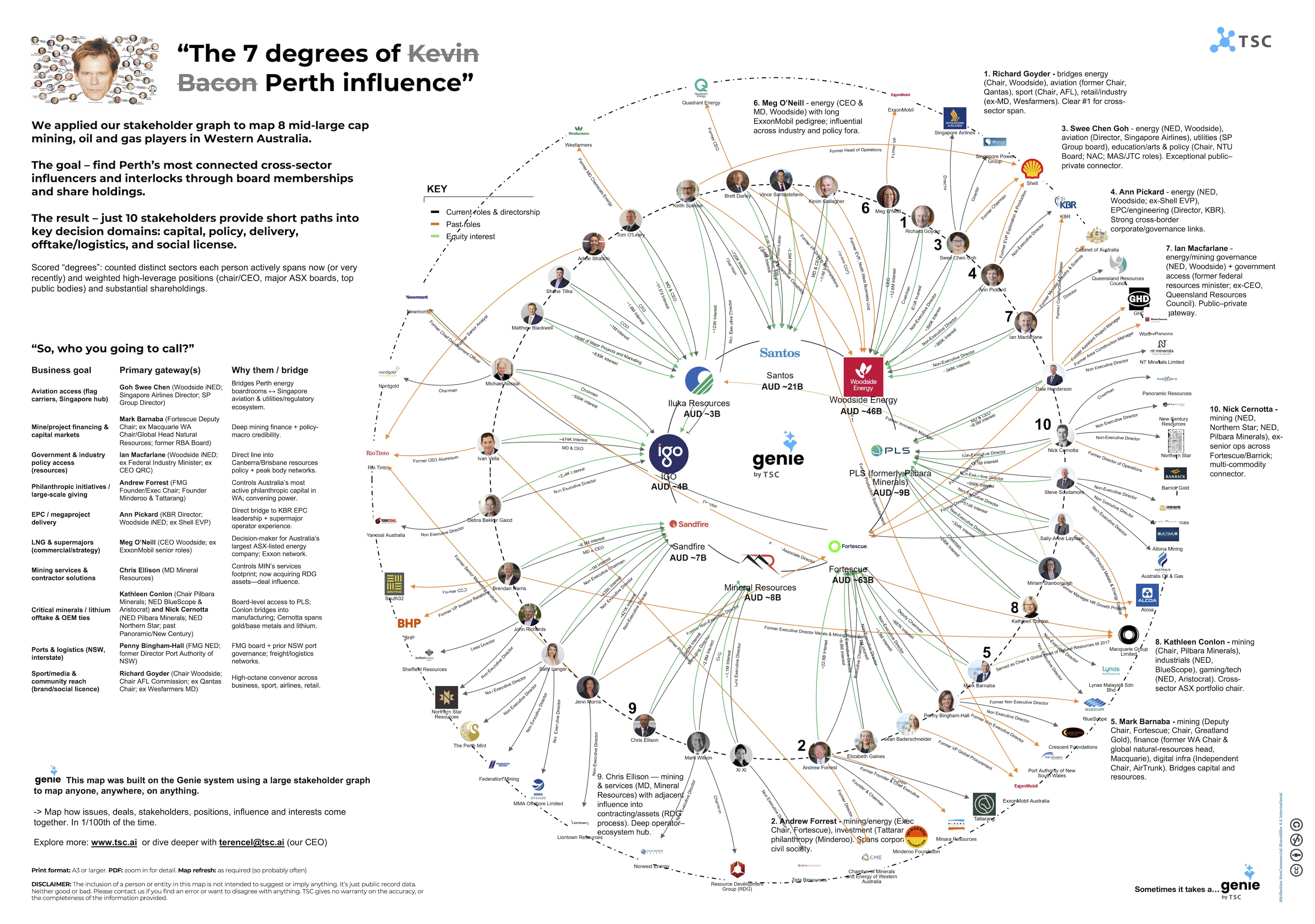
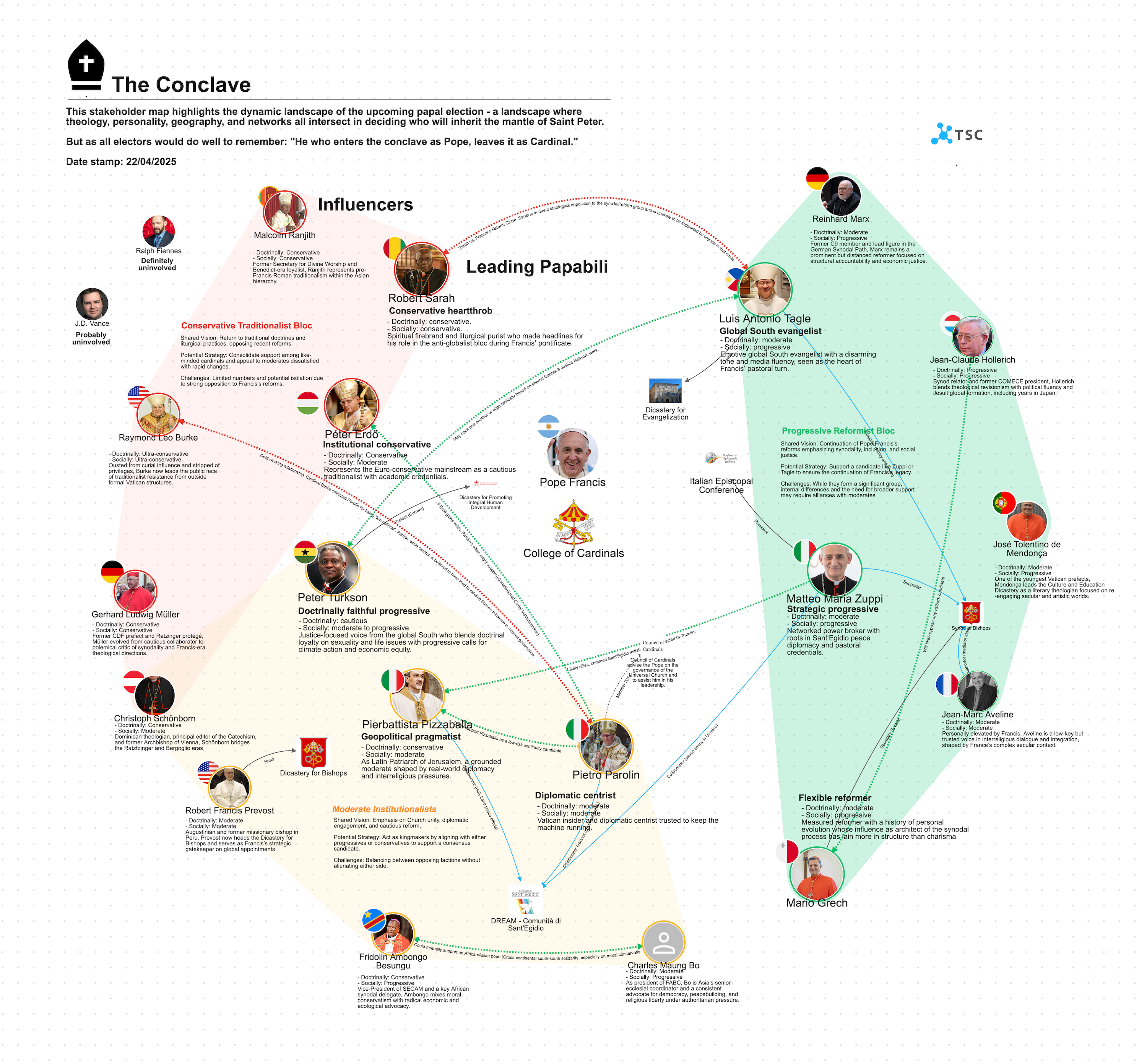
TSC.ai’s Event Tracker was configured to map key policy and industry events relevant to the Group’s Brussels engagement priorities, surfacing opportunities as they developed in the regulatory calendar. Alongside this, the Stakeholder Network Mapping capability enabled the team to visualise influence networks around priority policy issues - showing stakeholder connections, identifying actors outside the team’s existing relationship base, and supporting data-driven decisions about who to engage and when.
These two capabilities received the most consistently positive feedback from the team’s champions. They offered a structured, evidence-based foundation for Brussels engagement planning that had not previously existed in a single system, and gave the team a way to answer a question that had previously relied on individual institutional knowledge: who is connected to whom, and who are we missing?
With 23 countries in scope and OpCo teams ranging from large European markets to smaller operations in sub-Saharan Africa, ensuring that both the Group function and individual country teams stayed informed about relevant developments - competitor activity, regulatory shifts, stakeholder movements, and issue trends - required a level of curation and synthesis beyond what any single team member could sustain. Intelligence was being consumed from multiple providers, but there was no coordinated mechanism for delivering it in a format tailored to the Public Affairs team’s specific priorities.
Genie system was configured to deliver a weekly intelligence infrastructure covering the Group’s full geographic scope. The Group-level Weekly Digest covered the Group and competitor mentions, CEO activity, peer group analysis, top influencers in the telecoms sector, upcoming events, and cost-of-living-related trends across key European markets. Eight additional geo-specific newsletters were delivered to smaller OpCos across Europe and Africa, providing locally relevant media coverage and telecom industry updates.
A dedicated Cost of Living Tracker dashboard was also built for Germany, Italy, Spain, and the UK, monitoring media coverage, emerging stakeholders, and issue trends across the cost of living debate - an issue with direct implications for the Group’s regulatory positioning in its core European markets. Together, the intelligence layer gave both Group and market-level teams a continuous, structured view of the issues and actors shaping their operating environment, delivered on a consistent cadence without requiring individual teams to build or manage their own monitoring workflows.
Through its engagement with TSC.ai, the Group’s Public Affairs and Campaigns function built the foundations of a structured stakeholder intelligence and engagement capability - a centralised system spanning 21 markets across three deployment phases, underpinned by a ~30,000-strong stakeholder database, and delivering coordinated intelligence across two continents.
The infrastructure established what the team had lacked: an institutional record of engagement activity across 1,148 logged interactions, a structured mechanism for tracking influence networks at the Brussels level, and a consistent intelligence layer tailored to both Group priorities and individual market needs. Where external affairs engagement had previously been managed through fragmented individual workflows, TSC.ai provided the operational backbone to coordinate it at scale.
A leading global telecommunications group operates across more than 20 markets on two continents, with a Public Affairs function responsible for coordinating engagement with policymakers, regulators, and key influencers at both the Group level and across individual country-level Operating Companies (OpCos).
The function reports to the Chief External & Corporate Affairs Officer, and its remit spans everything from EU regulatory engagement in Brussels to government relations across sub-Saharan Africa and the Middle East. Operating at this scale, with 21 designated country-level teams and 475 platform users, the function demands a level of structural intelligence and coordination that goes well beyond what most public affairs teams have historically been equipped to deliver.
The core challenge was one of scale and fragmentation. Twenty-one teams across Europe, Africa, and the Middle East were each managing their own stakeholder relationships, policy engagements, and intelligence workflows with no shared view of what was happening across the organisation.
There was no central record of who had been engaged, no mechanism for the Group team to see patterns across markets, and no structured way to connect issue intelligence from one geography to strategic decisions at the Group level.
For a function expected to produce consolidated engagement reports and brief the Chief External Affairs Officer on the state of global stakeholder relationships, this absence of institutional infrastructure created real operational exposure.
TSC.ai deployed its stakeholder intelligence and engagement platform across the Group’s global Public Affairs function in three phased waves. Phase 1 covered five priority markets, including the UK, Brussels, South Africa, Spain, and Hungary. Phases 2 and 3 extended the system to a further sixteen countries across Europe and Africa, including Germany, Italy, Egypt, Turkey, Tanzania, Kenya, Mozambique, and the Democratic Republic of Congo.
The platform was configured with a database of ~30,000 stakeholders, covering both English and Arabic, 20 custom dashboards structured by country and issue theme, and an engagement tracking workflow that enabled teams in each of the 21 markets to log interactions directly in the system.
In parallel, the teams are also receiving a weekly intelligence - a group-level digest and eight geo-specific newsletters - drawing from a media monitoring scope covering 23 countries.
The Group Public Affairs team needed a shared record of stakeholder engagement across all 21 operating markets. Without it, the function had no reliable way to produce consolidated engagement reports, identify relationship gaps by geography, or maintain institutional memory as personnel moved between markets and roles. Engagement activity that existed only in individual inboxes and notebooks could not be surfaced, synthesised, or reported - a structural weakness for a function with direct accountability to the Chief External Affairs Officer.
TSC.ai became the central engagement tracking system for the Group’s Public Affairs function. The mandate in all 21 markets was to log all interactions through the platform. Over the course of the engagement, teams logged 1,148 touchpoints across the system - building a searchable institutional record of meetings, interactions, and policy engagements spanning two continents.
The platform enabled the Group team to produce consolidated engagement reports by market, giving the Head of Public Affairs a structured view of where engagement was active and where gaps existed. For the first time, the function had a single source of truth for relationship activity across its full global footprint - not dependent on individuals, not locked in local files, and accessible to the Group team in real time.
For a telecommunications group with significant exposure to European regulatory developments - including Open RAN policy, high-risk vendor regulation, and spectrum allocation - Brussels was a critical engagement environment. The Public Affairs team needed a systematic way to identify which events mattered, who was shaping debate within them, and how key policy influencers connected to each other. Without that capability, engagement in Brussels remained largely reactive and relationship-dependent rather than intelligence-led.
TSC.ai’s Event Tracker was configured to map key policy and industry events relevant to the Group’s Brussels engagement priorities, surfacing opportunities as they developed in the regulatory calendar. Alongside this, the Stakeholder Network Mapping capability enabled the team to visualise influence networks around priority policy issues - showing stakeholder connections, identifying actors outside the team’s existing relationship base, and supporting data-driven decisions about who to engage and when.
These two capabilities received the most consistently positive feedback from the team’s champions. They offered a structured, evidence-based foundation for Brussels engagement planning that had not previously existed in a single system, and gave the team a way to answer a question that had previously relied on individual institutional knowledge: who is connected to whom, and who are we missing?
With 23 countries in scope and OpCo teams ranging from large European markets to smaller operations in sub-Saharan Africa, ensuring that both the Group function and individual country teams stayed informed about relevant developments - competitor activity, regulatory shifts, stakeholder movements, and issue trends - required a level of curation and synthesis beyond what any single team member could sustain. Intelligence was being consumed from multiple providers, but there was no coordinated mechanism for delivering it in a format tailored to the Public Affairs team’s specific priorities.
Genie system was configured to deliver a weekly intelligence infrastructure covering the Group’s full geographic scope. The Group-level Weekly Digest covered the Group and competitor mentions, CEO activity, peer group analysis, top influencers in the telecoms sector, upcoming events, and cost-of-living-related trends across key European markets. Eight additional geo-specific newsletters were delivered to smaller OpCos across Europe and Africa, providing locally relevant media coverage and telecom industry updates.
A dedicated Cost of Living Tracker dashboard was also built for Germany, Italy, Spain, and the UK, monitoring media coverage, emerging stakeholders, and issue trends across the cost of living debate - an issue with direct implications for the Group’s regulatory positioning in its core European markets. Together, the intelligence layer gave both Group and market-level teams a continuous, structured view of the issues and actors shaping their operating environment, delivered on a consistent cadence without requiring individual teams to build or manage their own monitoring workflows.
Through its engagement with TSC.ai, the Group’s Public Affairs and Campaigns function built the foundations of a structured stakeholder intelligence and engagement capability - a centralised system spanning 21 markets across three deployment phases, underpinned by a ~30,000-strong stakeholder database, and delivering coordinated intelligence across two continents.
The infrastructure established what the team had lacked: an institutional record of engagement activity across 1,148 logged interactions, a structured mechanism for tracking influence networks at the Brussels level, and a consistent intelligence layer tailored to both Group priorities and individual market needs. Where external affairs engagement had previously been managed through fragmented individual workflows, TSC.ai provided the operational backbone to coordinate it at scale.
A leading global telecommunications group operates across more than 20 markets on two continents, with a Public Affairs function responsible for coordinating engagement with policymakers, regulators, and key influencers at both the Group level and across individual country-level Operating Companies (OpCos).
The function reports to the Chief External & Corporate Affairs Officer, and its remit spans everything from EU regulatory engagement in Brussels to government relations across sub-Saharan Africa and the Middle East. Operating at this scale, with 21 designated country-level teams and 475 platform users, the function demands a level of structural intelligence and coordination that goes well beyond what most public affairs teams have historically been equipped to deliver.
The core challenge was one of scale and fragmentation. Twenty-one teams across Europe, Africa, and the Middle East were each managing their own stakeholder relationships, policy engagements, and intelligence workflows with no shared view of what was happening across the organisation.
There was no central record of who had been engaged, no mechanism for the Group team to see patterns across markets, and no structured way to connect issue intelligence from one geography to strategic decisions at the Group level.
For a function expected to produce consolidated engagement reports and brief the Chief External Affairs Officer on the state of global stakeholder relationships, this absence of institutional infrastructure created real operational exposure.
TSC.ai deployed its stakeholder intelligence and engagement platform across the Group’s global Public Affairs function in three phased waves. Phase 1 covered five priority markets, including the UK, Brussels, South Africa, Spain, and Hungary. Phases 2 and 3 extended the system to a further sixteen countries across Europe and Africa, including Germany, Italy, Egypt, Turkey, Tanzania, Kenya, Mozambique, and the Democratic Republic of Congo.
The platform was configured with a database of ~30,000 stakeholders, covering both English and Arabic, 20 custom dashboards structured by country and issue theme, and an engagement tracking workflow that enabled teams in each of the 21 markets to log interactions directly in the system.
In parallel, the teams are also receiving a weekly intelligence - a group-level digest and eight geo-specific newsletters - drawing from a media monitoring scope covering 23 countries.
The Group Public Affairs team needed a shared record of stakeholder engagement across all 21 operating markets. Without it, the function had no reliable way to produce consolidated engagement reports, identify relationship gaps by geography, or maintain institutional memory as personnel moved between markets and roles. Engagement activity that existed only in individual inboxes and notebooks could not be surfaced, synthesised, or reported - a structural weakness for a function with direct accountability to the Chief External Affairs Officer.
TSC.ai became the central engagement tracking system for the Group’s Public Affairs function. The mandate in all 21 markets was to log all interactions through the platform. Over the course of the engagement, teams logged 1,148 touchpoints across the system - building a searchable institutional record of meetings, interactions, and policy engagements spanning two continents.
The platform enabled the Group team to produce consolidated engagement reports by market, giving the Head of Public Affairs a structured view of where engagement was active and where gaps existed. For the first time, the function had a single source of truth for relationship activity across its full global footprint - not dependent on individuals, not locked in local files, and accessible to the Group team in real time.
For a telecommunications group with significant exposure to European regulatory developments - including Open RAN policy, high-risk vendor regulation, and spectrum allocation - Brussels was a critical engagement environment. The Public Affairs team needed a systematic way to identify which events mattered, who was shaping debate within them, and how key policy influencers connected to each other. Without that capability, engagement in Brussels remained largely reactive and relationship-dependent rather than intelligence-led.
TSC.ai’s Event Tracker was configured to map key policy and industry events relevant to the Group’s Brussels engagement priorities, surfacing opportunities as they developed in the regulatory calendar. Alongside this, the Stakeholder Network Mapping capability enabled the team to visualise influence networks around priority policy issues - showing stakeholder connections, identifying actors outside the team’s existing relationship base, and supporting data-driven decisions about who to engage and when.
These two capabilities received the most consistently positive feedback from the team’s champions. They offered a structured, evidence-based foundation for Brussels engagement planning that had not previously existed in a single system, and gave the team a way to answer a question that had previously relied on individual institutional knowledge: who is connected to whom, and who are we missing?
With 23 countries in scope and OpCo teams ranging from large European markets to smaller operations in sub-Saharan Africa, ensuring that both the Group function and individual country teams stayed informed about relevant developments - competitor activity, regulatory shifts, stakeholder movements, and issue trends - required a level of curation and synthesis beyond what any single team member could sustain. Intelligence was being consumed from multiple providers, but there was no coordinated mechanism for delivering it in a format tailored to the Public Affairs team’s specific priorities.
Genie system was configured to deliver a weekly intelligence infrastructure covering the Group’s full geographic scope. The Group-level Weekly Digest covered the Group and competitor mentions, CEO activity, peer group analysis, top influencers in the telecoms sector, upcoming events, and cost-of-living-related trends across key European markets. Eight additional geo-specific newsletters were delivered to smaller OpCos across Europe and Africa, providing locally relevant media coverage and telecom industry updates.
A dedicated Cost of Living Tracker dashboard was also built for Germany, Italy, Spain, and the UK, monitoring media coverage, emerging stakeholders, and issue trends across the cost of living debate - an issue with direct implications for the Group’s regulatory positioning in its core European markets. Together, the intelligence layer gave both Group and market-level teams a continuous, structured view of the issues and actors shaping their operating environment, delivered on a consistent cadence without requiring individual teams to build or manage their own monitoring workflows.
Through its engagement with TSC.ai, the Group’s Public Affairs and Campaigns function built the foundations of a structured stakeholder intelligence and engagement capability - a centralised system spanning 21 markets across three deployment phases, underpinned by a ~30,000-strong stakeholder database, and delivering coordinated intelligence across two continents.
The infrastructure established what the team had lacked: an institutional record of engagement activity across 1,148 logged interactions, a structured mechanism for tracking influence networks at the Brussels level, and a consistent intelligence layer tailored to both Group priorities and individual market needs. Where external affairs engagement had previously been managed through fragmented individual workflows, TSC.ai provided the operational backbone to coordinate it at scale.
A leading global telecommunications group operates across more than 20 markets on two continents, with a Public Affairs function responsible for coordinating engagement with policymakers, regulators, and key influencers at both the Group level and across individual country-level Operating Companies (OpCos).
The function reports to the Chief External & Corporate Affairs Officer, and its remit spans everything from EU regulatory engagement in Brussels to government relations across sub-Saharan Africa and the Middle East. Operating at this scale, with 21 designated country-level teams and 475 platform users, the function demands a level of structural intelligence and coordination that goes well beyond what most public affairs teams have historically been equipped to deliver.
The core challenge was one of scale and fragmentation. Twenty-one teams across Europe, Africa, and the Middle East were each managing their own stakeholder relationships, policy engagements, and intelligence workflows with no shared view of what was happening across the organisation.
There was no central record of who had been engaged, no mechanism for the Group team to see patterns across markets, and no structured way to connect issue intelligence from one geography to strategic decisions at the Group level.
For a function expected to produce consolidated engagement reports and brief the Chief External Affairs Officer on the state of global stakeholder relationships, this absence of institutional infrastructure created real operational exposure.
TSC.ai deployed its stakeholder intelligence and engagement platform across the Group’s global Public Affairs function in three phased waves. Phase 1 covered five priority markets, including the UK, Brussels, South Africa, Spain, and Hungary. Phases 2 and 3 extended the system to a further sixteen countries across Europe and Africa, including Germany, Italy, Egypt, Turkey, Tanzania, Kenya, Mozambique, and the Democratic Republic of Congo.
The platform was configured with a database of ~30,000 stakeholders, covering both English and Arabic, 20 custom dashboards structured by country and issue theme, and an engagement tracking workflow that enabled teams in each of the 21 markets to log interactions directly in the system.
In parallel, the teams are also receiving a weekly intelligence - a group-level digest and eight geo-specific newsletters - drawing from a media monitoring scope covering 23 countries.
The Group Public Affairs team needed a shared record of stakeholder engagement across all 21 operating markets. Without it, the function had no reliable way to produce consolidated engagement reports, identify relationship gaps by geography, or maintain institutional memory as personnel moved between markets and roles. Engagement activity that existed only in individual inboxes and notebooks could not be surfaced, synthesised, or reported - a structural weakness for a function with direct accountability to the Chief External Affairs Officer.
TSC.ai became the central engagement tracking system for the Group’s Public Affairs function. The mandate in all 21 markets was to log all interactions through the platform. Over the course of the engagement, teams logged 1,148 touchpoints across the system - building a searchable institutional record of meetings, interactions, and policy engagements spanning two continents.
The platform enabled the Group team to produce consolidated engagement reports by market, giving the Head of Public Affairs a structured view of where engagement was active and where gaps existed. For the first time, the function had a single source of truth for relationship activity across its full global footprint - not dependent on individuals, not locked in local files, and accessible to the Group team in real time.
For a telecommunications group with significant exposure to European regulatory developments - including Open RAN policy, high-risk vendor regulation, and spectrum allocation - Brussels was a critical engagement environment. The Public Affairs team needed a systematic way to identify which events mattered, who was shaping debate within them, and how key policy influencers connected to each other. Without that capability, engagement in Brussels remained largely reactive and relationship-dependent rather than intelligence-led.
TSC.ai’s Event Tracker was configured to map key policy and industry events relevant to the Group’s Brussels engagement priorities, surfacing opportunities as they developed in the regulatory calendar. Alongside this, the Stakeholder Network Mapping capability enabled the team to visualise influence networks around priority policy issues - showing stakeholder connections, identifying actors outside the team’s existing relationship base, and supporting data-driven decisions about who to engage and when.
These two capabilities received the most consistently positive feedback from the team’s champions. They offered a structured, evidence-based foundation for Brussels engagement planning that had not previously existed in a single system, and gave the team a way to answer a question that had previously relied on individual institutional knowledge: who is connected to whom, and who are we missing?
With 23 countries in scope and OpCo teams ranging from large European markets to smaller operations in sub-Saharan Africa, ensuring that both the Group function and individual country teams stayed informed about relevant developments - competitor activity, regulatory shifts, stakeholder movements, and issue trends - required a level of curation and synthesis beyond what any single team member could sustain. Intelligence was being consumed from multiple providers, but there was no coordinated mechanism for delivering it in a format tailored to the Public Affairs team’s specific priorities.
Genie system was configured to deliver a weekly intelligence infrastructure covering the Group’s full geographic scope. The Group-level Weekly Digest covered the Group and competitor mentions, CEO activity, peer group analysis, top influencers in the telecoms sector, upcoming events, and cost-of-living-related trends across key European markets. Eight additional geo-specific newsletters were delivered to smaller OpCos across Europe and Africa, providing locally relevant media coverage and telecom industry updates.
A dedicated Cost of Living Tracker dashboard was also built for Germany, Italy, Spain, and the UK, monitoring media coverage, emerging stakeholders, and issue trends across the cost of living debate - an issue with direct implications for the Group’s regulatory positioning in its core European markets. Together, the intelligence layer gave both Group and market-level teams a continuous, structured view of the issues and actors shaping their operating environment, delivered on a consistent cadence without requiring individual teams to build or manage their own monitoring workflows.
Through its engagement with TSC.ai, the Group’s Public Affairs and Campaigns function built the foundations of a structured stakeholder intelligence and engagement capability - a centralised system spanning 21 markets across three deployment phases, underpinned by a ~30,000-strong stakeholder database, and delivering coordinated intelligence across two continents.
The infrastructure established what the team had lacked: an institutional record of engagement activity across 1,148 logged interactions, a structured mechanism for tracking influence networks at the Brussels level, and a consistent intelligence layer tailored to both Group priorities and individual market needs. Where external affairs engagement had previously been managed through fragmented individual workflows, TSC.ai provided the operational backbone to coordinate it at scale.
A leading global telecommunications group operates across more than 20 markets on two continents, with a Public Affairs function responsible for coordinating engagement with policymakers, regulators, and key influencers at both the Group level and across individual country-level Operating Companies (OpCos).
The function reports to the Chief External & Corporate Affairs Officer, and its remit spans everything from EU regulatory engagement in Brussels to government relations across sub-Saharan Africa and the Middle East. Operating at this scale, with 21 designated country-level teams and 475 platform users, the function demands a level of structural intelligence and coordination that goes well beyond what most public affairs teams have historically been equipped to deliver.
The core challenge was one of scale and fragmentation. Twenty-one teams across Europe, Africa, and the Middle East were each managing their own stakeholder relationships, policy engagements, and intelligence workflows with no shared view of what was happening across the organisation.
There was no central record of who had been engaged, no mechanism for the Group team to see patterns across markets, and no structured way to connect issue intelligence from one geography to strategic decisions at the Group level.
For a function expected to produce consolidated engagement reports and brief the Chief External Affairs Officer on the state of global stakeholder relationships, this absence of institutional infrastructure created real operational exposure.
TSC.ai deployed its stakeholder intelligence and engagement platform across the Group’s global Public Affairs function in three phased waves. Phase 1 covered five priority markets, including the UK, Brussels, South Africa, Spain, and Hungary. Phases 2 and 3 extended the system to a further sixteen countries across Europe and Africa, including Germany, Italy, Egypt, Turkey, Tanzania, Kenya, Mozambique, and the Democratic Republic of Congo.
The platform was configured with a database of ~30,000 stakeholders, covering both English and Arabic, 20 custom dashboards structured by country and issue theme, and an engagement tracking workflow that enabled teams in each of the 21 markets to log interactions directly in the system.
In parallel, the teams are also receiving a weekly intelligence - a group-level digest and eight geo-specific newsletters - drawing from a media monitoring scope covering 23 countries.
The Group Public Affairs team needed a shared record of stakeholder engagement across all 21 operating markets. Without it, the function had no reliable way to produce consolidated engagement reports, identify relationship gaps by geography, or maintain institutional memory as personnel moved between markets and roles. Engagement activity that existed only in individual inboxes and notebooks could not be surfaced, synthesised, or reported - a structural weakness for a function with direct accountability to the Chief External Affairs Officer.
TSC.ai became the central engagement tracking system for the Group’s Public Affairs function. The mandate in all 21 markets was to log all interactions through the platform. Over the course of the engagement, teams logged 1,148 touchpoints across the system - building a searchable institutional record of meetings, interactions, and policy engagements spanning two continents.
The platform enabled the Group team to produce consolidated engagement reports by market, giving the Head of Public Affairs a structured view of where engagement was active and where gaps existed. For the first time, the function had a single source of truth for relationship activity across its full global footprint - not dependent on individuals, not locked in local files, and accessible to the Group team in real time.
For a telecommunications group with significant exposure to European regulatory developments - including Open RAN policy, high-risk vendor regulation, and spectrum allocation - Brussels was a critical engagement environment. The Public Affairs team needed a systematic way to identify which events mattered, who was shaping debate within them, and how key policy influencers connected to each other. Without that capability, engagement in Brussels remained largely reactive and relationship-dependent rather than intelligence-led.
TSC.ai’s Event Tracker was configured to map key policy and industry events relevant to the Group’s Brussels engagement priorities, surfacing opportunities as they developed in the regulatory calendar. Alongside this, the Stakeholder Network Mapping capability enabled the team to visualise influence networks around priority policy issues - showing stakeholder connections, identifying actors outside the team’s existing relationship base, and supporting data-driven decisions about who to engage and when.
These two capabilities received the most consistently positive feedback from the team’s champions. They offered a structured, evidence-based foundation for Brussels engagement planning that had not previously existed in a single system, and gave the team a way to answer a question that had previously relied on individual institutional knowledge: who is connected to whom, and who are we missing?
With 23 countries in scope and OpCo teams ranging from large European markets to smaller operations in sub-Saharan Africa, ensuring that both the Group function and individual country teams stayed informed about relevant developments - competitor activity, regulatory shifts, stakeholder movements, and issue trends - required a level of curation and synthesis beyond what any single team member could sustain. Intelligence was being consumed from multiple providers, but there was no coordinated mechanism for delivering it in a format tailored to the Public Affairs team’s specific priorities.
Genie system was configured to deliver a weekly intelligence infrastructure covering the Group’s full geographic scope. The Group-level Weekly Digest covered the Group and competitor mentions, CEO activity, peer group analysis, top influencers in the telecoms sector, upcoming events, and cost-of-living-related trends across key European markets. Eight additional geo-specific newsletters were delivered to smaller OpCos across Europe and Africa, providing locally relevant media coverage and telecom industry updates.
A dedicated Cost of Living Tracker dashboard was also built for Germany, Italy, Spain, and the UK, monitoring media coverage, emerging stakeholders, and issue trends across the cost of living debate - an issue with direct implications for the Group’s regulatory positioning in its core European markets. Together, the intelligence layer gave both Group and market-level teams a continuous, structured view of the issues and actors shaping their operating environment, delivered on a consistent cadence without requiring individual teams to build or manage their own monitoring workflows.
Through its engagement with TSC.ai, the Group’s Public Affairs and Campaigns function built the foundations of a structured stakeholder intelligence and engagement capability - a centralised system spanning 21 markets across three deployment phases, underpinned by a ~30,000-strong stakeholder database, and delivering coordinated intelligence across two continents.
The infrastructure established what the team had lacked: an institutional record of engagement activity across 1,148 logged interactions, a structured mechanism for tracking influence networks at the Brussels level, and a consistent intelligence layer tailored to both Group priorities and individual market needs. Where external affairs engagement had previously been managed through fragmented individual workflows, TSC.ai provided the operational backbone to coordinate it at scale.
A leading global telecommunications group operates across more than 20 markets on two continents, with a Public Affairs function responsible for coordinating engagement with policymakers, regulators, and key influencers at both the Group level and across individual country-level Operating Companies (OpCos).
The function reports to the Chief External & Corporate Affairs Officer, and its remit spans everything from EU regulatory engagement in Brussels to government relations across sub-Saharan Africa and the Middle East. Operating at this scale, with 21 designated country-level teams and 475 platform users, the function demands a level of structural intelligence and coordination that goes well beyond what most public affairs teams have historically been equipped to deliver.
The core challenge was one of scale and fragmentation. Twenty-one teams across Europe, Africa, and the Middle East were each managing their own stakeholder relationships, policy engagements, and intelligence workflows with no shared view of what was happening across the organisation.
There was no central record of who had been engaged, no mechanism for the Group team to see patterns across markets, and no structured way to connect issue intelligence from one geography to strategic decisions at the Group level.
For a function expected to produce consolidated engagement reports and brief the Chief External Affairs Officer on the state of global stakeholder relationships, this absence of institutional infrastructure created real operational exposure.
TSC.ai deployed its stakeholder intelligence and engagement platform across the Group’s global Public Affairs function in three phased waves. Phase 1 covered five priority markets, including the UK, Brussels, South Africa, Spain, and Hungary. Phases 2 and 3 extended the system to a further sixteen countries across Europe and Africa, including Germany, Italy, Egypt, Turkey, Tanzania, Kenya, Mozambique, and the Democratic Republic of Congo.
The platform was configured with a database of ~30,000 stakeholders, covering both English and Arabic, 20 custom dashboards structured by country and issue theme, and an engagement tracking workflow that enabled teams in each of the 21 markets to log interactions directly in the system.
In parallel, the teams are also receiving a weekly intelligence - a group-level digest and eight geo-specific newsletters - drawing from a media monitoring scope covering 23 countries.
The Group Public Affairs team needed a shared record of stakeholder engagement across all 21 operating markets. Without it, the function had no reliable way to produce consolidated engagement reports, identify relationship gaps by geography, or maintain institutional memory as personnel moved between markets and roles. Engagement activity that existed only in individual inboxes and notebooks could not be surfaced, synthesised, or reported - a structural weakness for a function with direct accountability to the Chief External Affairs Officer.
TSC.ai became the central engagement tracking system for the Group’s Public Affairs function. The mandate in all 21 markets was to log all interactions through the platform. Over the course of the engagement, teams logged 1,148 touchpoints across the system - building a searchable institutional record of meetings, interactions, and policy engagements spanning two continents.
The platform enabled the Group team to produce consolidated engagement reports by market, giving the Head of Public Affairs a structured view of where engagement was active and where gaps existed. For the first time, the function had a single source of truth for relationship activity across its full global footprint - not dependent on individuals, not locked in local files, and accessible to the Group team in real time.
For a telecommunications group with significant exposure to European regulatory developments - including Open RAN policy, high-risk vendor regulation, and spectrum allocation - Brussels was a critical engagement environment. The Public Affairs team needed a systematic way to identify which events mattered, who was shaping debate within them, and how key policy influencers connected to each other. Without that capability, engagement in Brussels remained largely reactive and relationship-dependent rather than intelligence-led.
TSC.ai’s Event Tracker was configured to map key policy and industry events relevant to the Group’s Brussels engagement priorities, surfacing opportunities as they developed in the regulatory calendar. Alongside this, the Stakeholder Network Mapping capability enabled the team to visualise influence networks around priority policy issues - showing stakeholder connections, identifying actors outside the team’s existing relationship base, and supporting data-driven decisions about who to engage and when.
These two capabilities received the most consistently positive feedback from the team’s champions. They offered a structured, evidence-based foundation for Brussels engagement planning that had not previously existed in a single system, and gave the team a way to answer a question that had previously relied on individual institutional knowledge: who is connected to whom, and who are we missing?
With 23 countries in scope and OpCo teams ranging from large European markets to smaller operations in sub-Saharan Africa, ensuring that both the Group function and individual country teams stayed informed about relevant developments - competitor activity, regulatory shifts, stakeholder movements, and issue trends - required a level of curation and synthesis beyond what any single team member could sustain. Intelligence was being consumed from multiple providers, but there was no coordinated mechanism for delivering it in a format tailored to the Public Affairs team’s specific priorities.
Genie system was configured to deliver a weekly intelligence infrastructure covering the Group’s full geographic scope. The Group-level Weekly Digest covered the Group and competitor mentions, CEO activity, peer group analysis, top influencers in the telecoms sector, upcoming events, and cost-of-living-related trends across key European markets. Eight additional geo-specific newsletters were delivered to smaller OpCos across Europe and Africa, providing locally relevant media coverage and telecom industry updates.
A dedicated Cost of Living Tracker dashboard was also built for Germany, Italy, Spain, and the UK, monitoring media coverage, emerging stakeholders, and issue trends across the cost of living debate - an issue with direct implications for the Group’s regulatory positioning in its core European markets. Together, the intelligence layer gave both Group and market-level teams a continuous, structured view of the issues and actors shaping their operating environment, delivered on a consistent cadence without requiring individual teams to build or manage their own monitoring workflows.
Through its engagement with TSC.ai, the Group’s Public Affairs and Campaigns function built the foundations of a structured stakeholder intelligence and engagement capability - a centralised system spanning 21 markets across three deployment phases, underpinned by a ~30,000-strong stakeholder database, and delivering coordinated intelligence across two continents.
The infrastructure established what the team had lacked: an institutional record of engagement activity across 1,148 logged interactions, a structured mechanism for tracking influence networks at the Brussels level, and a consistent intelligence layer tailored to both Group priorities and individual market needs. Where external affairs engagement had previously been managed through fragmented individual workflows, TSC.ai provided the operational backbone to coordinate it at scale.
A leading global telecommunications group operates across more than 20 markets on two continents, with a Public Affairs function responsible for coordinating engagement with policymakers, regulators, and key influencers at both the Group level and across individual country-level Operating Companies (OpCos).
The function reports to the Chief External & Corporate Affairs Officer, and its remit spans everything from EU regulatory engagement in Brussels to government relations across sub-Saharan Africa and the Middle East. Operating at this scale, with 21 designated country-level teams and 475 platform users, the function demands a level of structural intelligence and coordination that goes well beyond what most public affairs teams have historically been equipped to deliver.
The core challenge was one of scale and fragmentation. Twenty-one teams across Europe, Africa, and the Middle East were each managing their own stakeholder relationships, policy engagements, and intelligence workflows with no shared view of what was happening across the organisation.
There was no central record of who had been engaged, no mechanism for the Group team to see patterns across markets, and no structured way to connect issue intelligence from one geography to strategic decisions at the Group level.
For a function expected to produce consolidated engagement reports and brief the Chief External Affairs Officer on the state of global stakeholder relationships, this absence of institutional infrastructure created real operational exposure.
TSC.ai deployed its stakeholder intelligence and engagement platform across the Group’s global Public Affairs function in three phased waves. Phase 1 covered five priority markets, including the UK, Brussels, South Africa, Spain, and Hungary. Phases 2 and 3 extended the system to a further sixteen countries across Europe and Africa, including Germany, Italy, Egypt, Turkey, Tanzania, Kenya, Mozambique, and the Democratic Republic of Congo.
The platform was configured with a database of ~30,000 stakeholders, covering both English and Arabic, 20 custom dashboards structured by country and issue theme, and an engagement tracking workflow that enabled teams in each of the 21 markets to log interactions directly in the system.
In parallel, the teams are also receiving a weekly intelligence - a group-level digest and eight geo-specific newsletters - drawing from a media monitoring scope covering 23 countries.
The Group Public Affairs team needed a shared record of stakeholder engagement across all 21 operating markets. Without it, the function had no reliable way to produce consolidated engagement reports, identify relationship gaps by geography, or maintain institutional memory as personnel moved between markets and roles. Engagement activity that existed only in individual inboxes and notebooks could not be surfaced, synthesised, or reported - a structural weakness for a function with direct accountability to the Chief External Affairs Officer.
TSC.ai became the central engagement tracking system for the Group’s Public Affairs function. The mandate in all 21 markets was to log all interactions through the platform. Over the course of the engagement, teams logged 1,148 touchpoints across the system - building a searchable institutional record of meetings, interactions, and policy engagements spanning two continents.
The platform enabled the Group team to produce consolidated engagement reports by market, giving the Head of Public Affairs a structured view of where engagement was active and where gaps existed. For the first time, the function had a single source of truth for relationship activity across its full global footprint - not dependent on individuals, not locked in local files, and accessible to the Group team in real time.
For a telecommunications group with significant exposure to European regulatory developments - including Open RAN policy, high-risk vendor regulation, and spectrum allocation - Brussels was a critical engagement environment. The Public Affairs team needed a systematic way to identify which events mattered, who was shaping debate within them, and how key policy influencers connected to each other. Without that capability, engagement in Brussels remained largely reactive and relationship-dependent rather than intelligence-led.
TSC.ai’s Event Tracker was configured to map key policy and industry events relevant to the Group’s Brussels engagement priorities, surfacing opportunities as they developed in the regulatory calendar. Alongside this, the Stakeholder Network Mapping capability enabled the team to visualise influence networks around priority policy issues - showing stakeholder connections, identifying actors outside the team’s existing relationship base, and supporting data-driven decisions about who to engage and when.
These two capabilities received the most consistently positive feedback from the team’s champions. They offered a structured, evidence-based foundation for Brussels engagement planning that had not previously existed in a single system, and gave the team a way to answer a question that had previously relied on individual institutional knowledge: who is connected to whom, and who are we missing?
With 23 countries in scope and OpCo teams ranging from large European markets to smaller operations in sub-Saharan Africa, ensuring that both the Group function and individual country teams stayed informed about relevant developments - competitor activity, regulatory shifts, stakeholder movements, and issue trends - required a level of curation and synthesis beyond what any single team member could sustain. Intelligence was being consumed from multiple providers, but there was no coordinated mechanism for delivering it in a format tailored to the Public Affairs team’s specific priorities.
Genie system was configured to deliver a weekly intelligence infrastructure covering the Group’s full geographic scope. The Group-level Weekly Digest covered the Group and competitor mentions, CEO activity, peer group analysis, top influencers in the telecoms sector, upcoming events, and cost-of-living-related trends across key European markets. Eight additional geo-specific newsletters were delivered to smaller OpCos across Europe and Africa, providing locally relevant media coverage and telecom industry updates.
A dedicated Cost of Living Tracker dashboard was also built for Germany, Italy, Spain, and the UK, monitoring media coverage, emerging stakeholders, and issue trends across the cost of living debate - an issue with direct implications for the Group’s regulatory positioning in its core European markets. Together, the intelligence layer gave both Group and market-level teams a continuous, structured view of the issues and actors shaping their operating environment, delivered on a consistent cadence without requiring individual teams to build or manage their own monitoring workflows.
Through its engagement with TSC.ai, the Group’s Public Affairs and Campaigns function built the foundations of a structured stakeholder intelligence and engagement capability - a centralised system spanning 21 markets across three deployment phases, underpinned by a ~30,000-strong stakeholder database, and delivering coordinated intelligence across two continents.
The infrastructure established what the team had lacked: an institutional record of engagement activity across 1,148 logged interactions, a structured mechanism for tracking influence networks at the Brussels level, and a consistent intelligence layer tailored to both Group priorities and individual market needs. Where external affairs engagement had previously been managed through fragmented individual workflows, TSC.ai provided the operational backbone to coordinate it at scale.
A leading global telecommunications group operates across more than 20 markets on two continents, with a Public Affairs function responsible for coordinating engagement with policymakers, regulators, and key influencers at both the Group level and across individual country-level Operating Companies (OpCos).
The function reports to the Chief External & Corporate Affairs Officer, and its remit spans everything from EU regulatory engagement in Brussels to government relations across sub-Saharan Africa and the Middle East. Operating at this scale, with 21 designated country-level teams and 475 platform users, the function demands a level of structural intelligence and coordination that goes well beyond what most public affairs teams have historically been equipped to deliver.
The core challenge was one of scale and fragmentation. Twenty-one teams across Europe, Africa, and the Middle East were each managing their own stakeholder relationships, policy engagements, and intelligence workflows with no shared view of what was happening across the organisation.
There was no central record of who had been engaged, no mechanism for the Group team to see patterns across markets, and no structured way to connect issue intelligence from one geography to strategic decisions at the Group level.
For a function expected to produce consolidated engagement reports and brief the Chief External Affairs Officer on the state of global stakeholder relationships, this absence of institutional infrastructure created real operational exposure.
TSC.ai deployed its stakeholder intelligence and engagement platform across the Group’s global Public Affairs function in three phased waves. Phase 1 covered five priority markets, including the UK, Brussels, South Africa, Spain, and Hungary. Phases 2 and 3 extended the system to a further sixteen countries across Europe and Africa, including Germany, Italy, Egypt, Turkey, Tanzania, Kenya, Mozambique, and the Democratic Republic of Congo.
The platform was configured with a database of ~30,000 stakeholders, covering both English and Arabic, 20 custom dashboards structured by country and issue theme, and an engagement tracking workflow that enabled teams in each of the 21 markets to log interactions directly in the system.
In parallel, the teams are also receiving a weekly intelligence - a group-level digest and eight geo-specific newsletters - drawing from a media monitoring scope covering 23 countries.
The Group Public Affairs team needed a shared record of stakeholder engagement across all 21 operating markets. Without it, the function had no reliable way to produce consolidated engagement reports, identify relationship gaps by geography, or maintain institutional memory as personnel moved between markets and roles. Engagement activity that existed only in individual inboxes and notebooks could not be surfaced, synthesised, or reported - a structural weakness for a function with direct accountability to the Chief External Affairs Officer.
TSC.ai became the central engagement tracking system for the Group’s Public Affairs function. The mandate in all 21 markets was to log all interactions through the platform. Over the course of the engagement, teams logged 1,148 touchpoints across the system - building a searchable institutional record of meetings, interactions, and policy engagements spanning two continents.
The platform enabled the Group team to produce consolidated engagement reports by market, giving the Head of Public Affairs a structured view of where engagement was active and where gaps existed. For the first time, the function had a single source of truth for relationship activity across its full global footprint - not dependent on individuals, not locked in local files, and accessible to the Group team in real time.
For a telecommunications group with significant exposure to European regulatory developments - including Open RAN policy, high-risk vendor regulation, and spectrum allocation - Brussels was a critical engagement environment. The Public Affairs team needed a systematic way to identify which events mattered, who was shaping debate within them, and how key policy influencers connected to each other. Without that capability, engagement in Brussels remained largely reactive and relationship-dependent rather than intelligence-led.
TSC.ai’s Event Tracker was configured to map key policy and industry events relevant to the Group’s Brussels engagement priorities, surfacing opportunities as they developed in the regulatory calendar. Alongside this, the Stakeholder Network Mapping capability enabled the team to visualise influence networks around priority policy issues - showing stakeholder connections, identifying actors outside the team’s existing relationship base, and supporting data-driven decisions about who to engage and when.
These two capabilities received the most consistently positive feedback from the team’s champions. They offered a structured, evidence-based foundation for Brussels engagement planning that had not previously existed in a single system, and gave the team a way to answer a question that had previously relied on individual institutional knowledge: who is connected to whom, and who are we missing?
With 23 countries in scope and OpCo teams ranging from large European markets to smaller operations in sub-Saharan Africa, ensuring that both the Group function and individual country teams stayed informed about relevant developments - competitor activity, regulatory shifts, stakeholder movements, and issue trends - required a level of curation and synthesis beyond what any single team member could sustain. Intelligence was being consumed from multiple providers, but there was no coordinated mechanism for delivering it in a format tailored to the Public Affairs team’s specific priorities.
Genie system was configured to deliver a weekly intelligence infrastructure covering the Group’s full geographic scope. The Group-level Weekly Digest covered the Group and competitor mentions, CEO activity, peer group analysis, top influencers in the telecoms sector, upcoming events, and cost-of-living-related trends across key European markets. Eight additional geo-specific newsletters were delivered to smaller OpCos across Europe and Africa, providing locally relevant media coverage and telecom industry updates.
A dedicated Cost of Living Tracker dashboard was also built for Germany, Italy, Spain, and the UK, monitoring media coverage, emerging stakeholders, and issue trends across the cost of living debate - an issue with direct implications for the Group’s regulatory positioning in its core European markets. Together, the intelligence layer gave both Group and market-level teams a continuous, structured view of the issues and actors shaping their operating environment, delivered on a consistent cadence without requiring individual teams to build or manage their own monitoring workflows.
Through its engagement with TSC.ai, the Group’s Public Affairs and Campaigns function built the foundations of a structured stakeholder intelligence and engagement capability - a centralised system spanning 21 markets across three deployment phases, underpinned by a ~30,000-strong stakeholder database, and delivering coordinated intelligence across two continents.
The infrastructure established what the team had lacked: an institutional record of engagement activity across 1,148 logged interactions, a structured mechanism for tracking influence networks at the Brussels level, and a consistent intelligence layer tailored to both Group priorities and individual market needs. Where external affairs engagement had previously been managed through fragmented individual workflows, TSC.ai provided the operational backbone to coordinate it at scale.
A leading global telecommunications group operates across more than 20 markets on two continents, with a Public Affairs function responsible for coordinating engagement with policymakers, regulators, and key influencers at both the Group level and across individual country-level Operating Companies (OpCos).
The function reports to the Chief External & Corporate Affairs Officer, and its remit spans everything from EU regulatory engagement in Brussels to government relations across sub-Saharan Africa and the Middle East. Operating at this scale, with 21 designated country-level teams and 475 platform users, the function demands a level of structural intelligence and coordination that goes well beyond what most public affairs teams have historically been equipped to deliver.
The core challenge was one of scale and fragmentation. Twenty-one teams across Europe, Africa, and the Middle East were each managing their own stakeholder relationships, policy engagements, and intelligence workflows with no shared view of what was happening across the organisation.
There was no central record of who had been engaged, no mechanism for the Group team to see patterns across markets, and no structured way to connect issue intelligence from one geography to strategic decisions at the Group level.
For a function expected to produce consolidated engagement reports and brief the Chief External Affairs Officer on the state of global stakeholder relationships, this absence of institutional infrastructure created real operational exposure.
TSC.ai deployed its stakeholder intelligence and engagement platform across the Group’s global Public Affairs function in three phased waves. Phase 1 covered five priority markets, including the UK, Brussels, South Africa, Spain, and Hungary. Phases 2 and 3 extended the system to a further sixteen countries across Europe and Africa, including Germany, Italy, Egypt, Turkey, Tanzania, Kenya, Mozambique, and the Democratic Republic of Congo.
The platform was configured with a database of ~30,000 stakeholders, covering both English and Arabic, 20 custom dashboards structured by country and issue theme, and an engagement tracking workflow that enabled teams in each of the 21 markets to log interactions directly in the system.
In parallel, the teams are also receiving a weekly intelligence - a group-level digest and eight geo-specific newsletters - drawing from a media monitoring scope covering 23 countries.
The Group Public Affairs team needed a shared record of stakeholder engagement across all 21 operating markets. Without it, the function had no reliable way to produce consolidated engagement reports, identify relationship gaps by geography, or maintain institutional memory as personnel moved between markets and roles. Engagement activity that existed only in individual inboxes and notebooks could not be surfaced, synthesised, or reported - a structural weakness for a function with direct accountability to the Chief External Affairs Officer.
TSC.ai became the central engagement tracking system for the Group’s Public Affairs function. The mandate in all 21 markets was to log all interactions through the platform. Over the course of the engagement, teams logged 1,148 touchpoints across the system - building a searchable institutional record of meetings, interactions, and policy engagements spanning two continents.
The platform enabled the Group team to produce consolidated engagement reports by market, giving the Head of Public Affairs a structured view of where engagement was active and where gaps existed. For the first time, the function had a single source of truth for relationship activity across its full global footprint - not dependent on individuals, not locked in local files, and accessible to the Group team in real time.
For a telecommunications group with significant exposure to European regulatory developments - including Open RAN policy, high-risk vendor regulation, and spectrum allocation - Brussels was a critical engagement environment. The Public Affairs team needed a systematic way to identify which events mattered, who was shaping debate within them, and how key policy influencers connected to each other. Without that capability, engagement in Brussels remained largely reactive and relationship-dependent rather than intelligence-led.
TSC.ai’s Event Tracker was configured to map key policy and industry events relevant to the Group’s Brussels engagement priorities, surfacing opportunities as they developed in the regulatory calendar. Alongside this, the Stakeholder Network Mapping capability enabled the team to visualise influence networks around priority policy issues - showing stakeholder connections, identifying actors outside the team’s existing relationship base, and supporting data-driven decisions about who to engage and when.
These two capabilities received the most consistently positive feedback from the team’s champions. They offered a structured, evidence-based foundation for Brussels engagement planning that had not previously existed in a single system, and gave the team a way to answer a question that had previously relied on individual institutional knowledge: who is connected to whom, and who are we missing?
With 23 countries in scope and OpCo teams ranging from large European markets to smaller operations in sub-Saharan Africa, ensuring that both the Group function and individual country teams stayed informed about relevant developments - competitor activity, regulatory shifts, stakeholder movements, and issue trends - required a level of curation and synthesis beyond what any single team member could sustain. Intelligence was being consumed from multiple providers, but there was no coordinated mechanism for delivering it in a format tailored to the Public Affairs team’s specific priorities.
Genie system was configured to deliver a weekly intelligence infrastructure covering the Group’s full geographic scope. The Group-level Weekly Digest covered the Group and competitor mentions, CEO activity, peer group analysis, top influencers in the telecoms sector, upcoming events, and cost-of-living-related trends across key European markets. Eight additional geo-specific newsletters were delivered to smaller OpCos across Europe and Africa, providing locally relevant media coverage and telecom industry updates.
A dedicated Cost of Living Tracker dashboard was also built for Germany, Italy, Spain, and the UK, monitoring media coverage, emerging stakeholders, and issue trends across the cost of living debate - an issue with direct implications for the Group’s regulatory positioning in its core European markets. Together, the intelligence layer gave both Group and market-level teams a continuous, structured view of the issues and actors shaping their operating environment, delivered on a consistent cadence without requiring individual teams to build or manage their own monitoring workflows.
Through its engagement with TSC.ai, the Group’s Public Affairs and Campaigns function built the foundations of a structured stakeholder intelligence and engagement capability - a centralised system spanning 21 markets across three deployment phases, underpinned by a ~30,000-strong stakeholder database, and delivering coordinated intelligence across two continents.
The infrastructure established what the team had lacked: an institutional record of engagement activity across 1,148 logged interactions, a structured mechanism for tracking influence networks at the Brussels level, and a consistent intelligence layer tailored to both Group priorities and individual market needs. Where external affairs engagement had previously been managed through fragmented individual workflows, TSC.ai provided the operational backbone to coordinate it at scale.

.png)
.png)

.png)



%20(1).png)